The cool water condition theory
It stands to reason that culture, a long-term ecological adaptation, varies with climate. Political scientist Christian Welzel developed the "Cool Water Condition" geo-climatic theory. It proposes that regions with cool seasons, steady rainfall, and coastal proximity facilitated decentralized resource management. This fosters egalitarian cultures with local autonomy, grassroots resistance to tyranny, and human empowerment.
The Rhine
In North-Western Europe, it is the river Rhine that provides the main cool water artery. Since glacial ages it has been abundantly glacier-fed, allowing navigation right from Basel (picture) down to the sea.
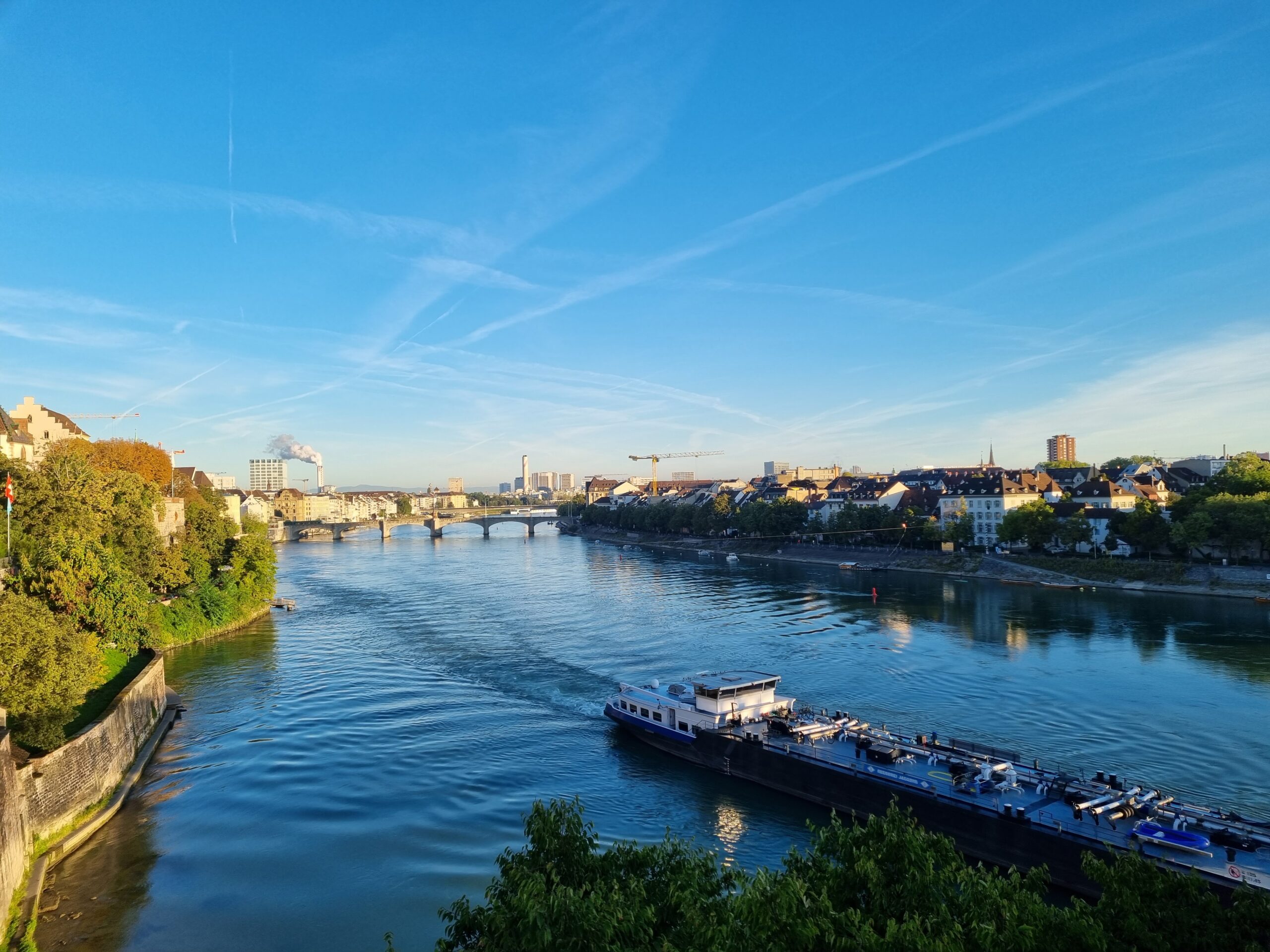
A boat on the Rhine in Basel

A boat on the Rhine near Wageningen
Boat-watching during Covid
During the Covid years, I loved riding my bicycle to Wageningen with my grandson. We would watch the boats glide along. The boy would wave and the boat would sometimes blow its horn back.
In a way, despite the fright and suffering, these were also optimistic times, with clear skies, human connection, and a sense that a fresh start was possible.
Climate change
In august 2022 I took a bicycle ride down the Rhine that made a big impression on me, since water levels were so low (see the blog with beautiful pictures). This year, the water has fallen at the same level three weeks earlier, and boat traffic on the Rhine is again impeded.
Where will this lead us?
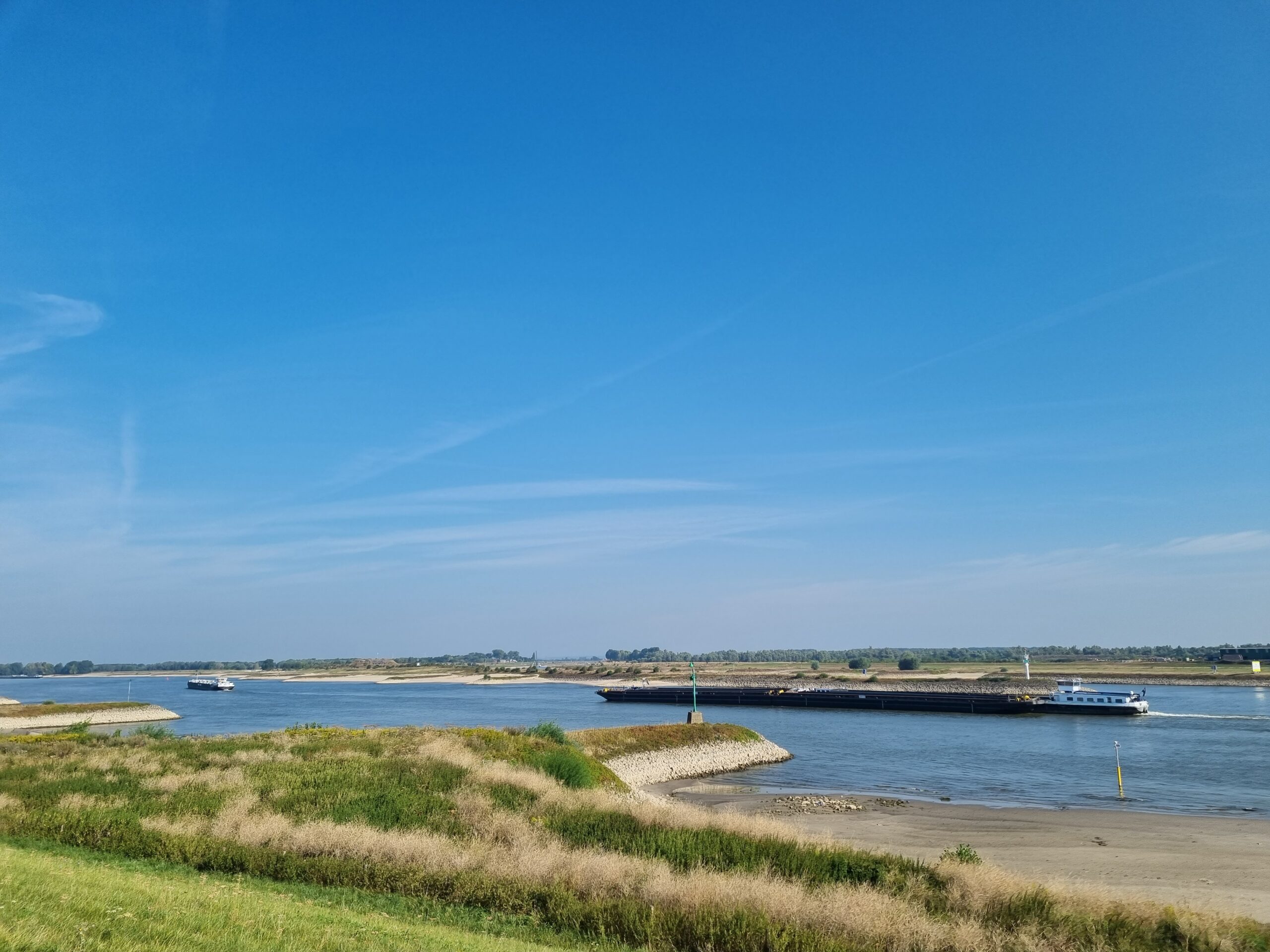
Low water near Lobith in August 2022
Taming the river
In the 18th and 19th centuries, the total length of the Rhine across Germany and the Netherlands was dwarfed by canalizations. Essentially it has become a canal, rather than the succession of marshy water habitats that it had been. Recently under more violent climate, this has led to huge fluctuations in water levels.
Room for the river
After a big flood in 1995 that required villages to be evacuated, the Dutch government initiated a major programme "Room for the river". This included refraining from building on areas near the river, and allowing large areas to get flooded in times of high water (picture). The canalisations were not undone, but high water can now be better handled. Indeed we've had no more floods. But we did not take similar measures against droughts.

Room for the river
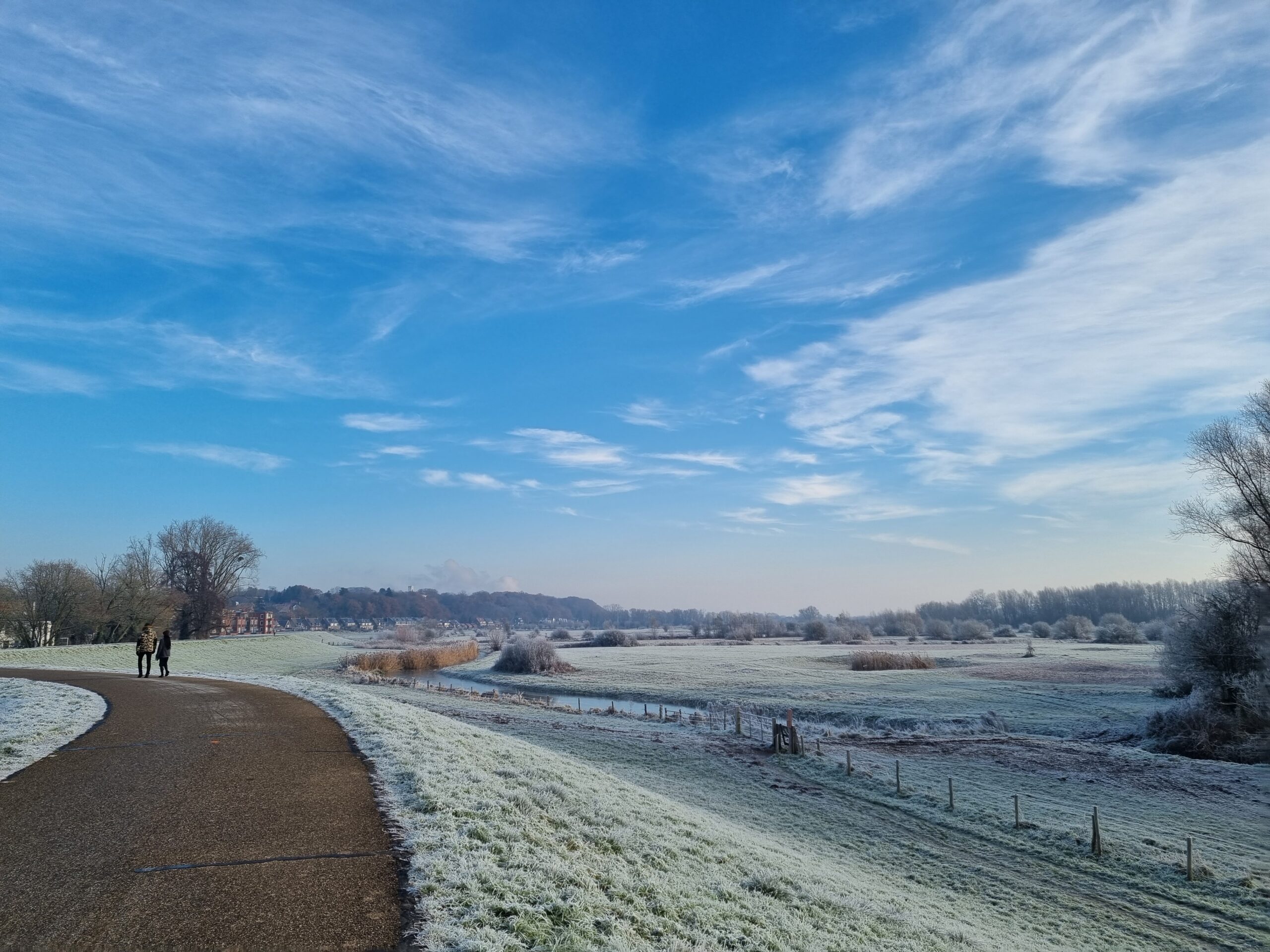
Snow in the Uiterwaarden
Skating near the river
Ice skating is a Dutch winter tradition. I myself used to love ice skating on the "uiterwaarden" next to the river, back in the days. Today, as the previous picture shows, there are still floods in the uiterwaarden.
The winter picture is taken in almost the same place. There is no water, no skating ice, but a bit of scenic snow - this is as far as winter will take us these days.
The Swiss alps
In the nineteen seventies I was a high school boy in Switzerland. We would go mountain hiking and glacier climbing.
In 2025 I visited my high school friend Philippe, and we went mountain hiking because it was so hot that we decided against an earlier bicycling plan. I had not been in the high Alps during the intervening fifty years. It was still breathtakingly beautiful, but it made me sad to see the pitiful remnants of glaciers. The Sivretta glacier, in 1900, would have filled the entire picture.
The Rhine is no longer a predictable meltwater river. It has become fickle, like the weather.

The Silvretta glacier, 2025
What's next?
Since the Rhine cannot be well navigated at this moment, trains and trucks are taking over transport. We may well have two months of ever-growing drought ahead of us.
The news is covering holiday traffic jams that result. Why is it not covering the long-term measures that are needed, or the floundering of the European Green Deal? Has nobody got any children or grandchildren any more, or any shame about the heritage they are leaving to them?
We are not doomed to slumbering or infighting our way out of the Cool Water Condition. We can take our fate into our hands. Do something. Every little bit helps.
